

Programming trends in 2026 will shape how organizations design, build, and operate software at scale. This article compiles key technology pillars, essential skills, and implementation strategies suited to the evolving digital landscape. The expert team at zenithxsmart works alongside businesses to turn emerging trends into sustainable competitive advantages.
Programming Trends In 2026 With Generative AI And Automation
Generative AI that assists with writing code, generating tests, and producing documentation is reshaping the role of developers. Modern development workflows now combine large language models with strict security and quality standards. At the core of this transformation is measurable productivity and tangible business value created through software products. More details are outlined below:
GenAI for Code Generation and Review
Generative AI is rapidly becoming a powerful assistant in the software development process. When used effectively, it can support developers in writing code, generating documentation, and suggesting improvements during the review stage. To unlock its real value, organizations typically build clear prompt guidelines and prepare curated datasets that reflect their internal coding standards and project requirements.
At the same time, strong governance mechanisms are necessary to ensure safe adoption. Review layers, data protection rules, and usage policies help minimize risks such as information exposure or overdependence on automated suggestions. Many teams also rely on measurable indicators—such as the acceptance rate of AI-generated suggestions or the number of defects detected after deployment—to evaluate how effectively AI contributes to development productivity.
CI/CD Automation and Software Quality
Measurement frameworks such as DORA metrics and quality indicators bring transparency across the entire organization. Observing operational data in real time enables faster responses to incidents. When properly standardized, automation becomes a key driver behind Programming trends in 2026.
Observability and Security by Design
Observability unifies logs, metrics, and traces, enabling teams to quickly and accurately identify root causes of system issues. Designing security from the beginning reduces remediation costs and minimizes legal risks. Managing secrets and keys according to the principle of least privilege further enhances system safety. Environment isolation, dependency scanning, and binary signing are becoming new standards. Software bills of materials help bring transparency to the software supply chain. In the middle of this article, the ZenithXSmart team emphasizes the importance of data governance to ensure strict compliance.
Cloud Architecture, Edge, and Real-Time Data
As data volumes grow, linear scalability and immutable architectures become increasingly essential. Operating systems through infrastructure as code helps maintain consistency across multiple environments. The close connection between data and user experience is becoming the core of new growth models within programming trends in 2026.
Cloud Native, Serverless, and Cost Optimization
Serverless computing reduces idle infrastructure costs and simplifies operations for on-demand services. Containers and orchestration platforms standardize deployment and enable rapid scaling. Effective cost optimization requires detailed measurement at the service, request, and data storage levels.
Integrating cost calculation tools directly into development pipelines enables immediate feedback when spending exceeds defined thresholds. Multi-cloud strategies are chosen selectively based on service capabilities rather than trends alone. Technical decisions are ultimately guided by long-term business value aligned with programming trends in 2026.
Edge Computing and User Experience
Edge computing brings computation closer to users, reducing latency and improving reliability. Applications operating across multiple geographic regions require efficient data synchronization and intelligent caching strategies. Combining dynamic CDNs with edge logic opens the door to fast and secure personalized experiences.
High availability design relies on regional fault isolation and safe rollback mechanisms. Client-side monitoring provides a complete picture of real-world performance. This aligns with the rising expectations of users within programming trends in 2026.
Data Streams, Event-Driven Architecture, and Real-Time Processing
Combining batch and stream processing opens the door to flexible hybrid analytics. The CQRS model and event sourcing optimize query performance and enable state reconstruction when needed. These platforms create a clear competitive advantage and align with the speed requirements of programming trends in 2026.
Skills, Languages, and Frameworks Worth Investing In
Modern web frameworks increasingly emphasize performance, flexibility, and search visibility. Features such as streaming and server-side rendering (SSR) allow applications to deliver content faster and improve the initial loading experience for users. These capabilities also support better indexing by search engines, which is particularly important for platforms that rely on organic traffic and content discovery.
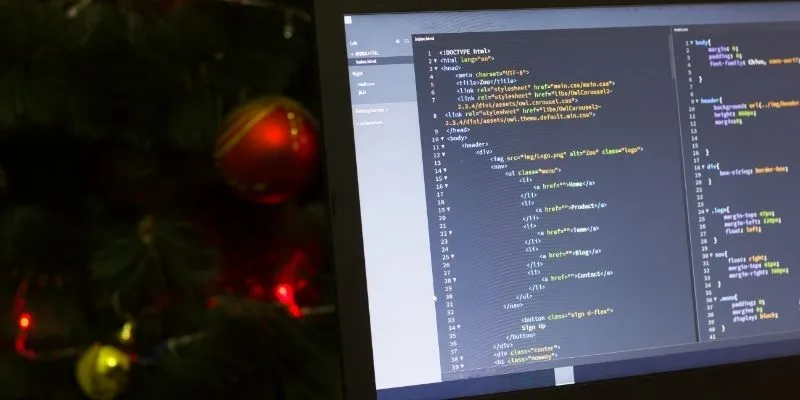
Another key investment is the adoption of design systems and reusable component libraries. Standardizing UI components helps maintain visual consistency across products while reducing development and maintenance costs. For developers, the most effective learning path combines strong foundational knowledge with hands-on project experience, ensuring that technical skills can be applied effectively in real-world systems.
JavaScript/TypeScript and the Web Ecosystem
On the back end, lightweight runtimes enable efficient concurrency and flexible scalability. A rich testing ecosystem supports end-to-end software quality. Routing, data management, and SEO optimization are increasingly treated as built-in considerations in system design aligned with programming trends in 2026.
Python, Rust, and Go for Performance and Safety
Python leads in data science, automation, and rapid prototyping. Rust provides memory safety and near-system-level performance. Go is simple, highly concurrent, and well suited for distributed services. Combining the right roles for each language allows teams to leverage the strengths of every technology. Standardized build and testing tools improve reliability across projects. Technology choices should ultimately be based on total cost, community support, and the evolving direction of programming trends in 2026.
Low-Code, No-Code, and Citizen Developers – programming Trends in 2026
Low-code platforms help accelerate experimentation and the development of simple workflows. Security policies and access control mechanisms ensure safety when expanding application creation capabilities. API and event integration enables rapid solutions to connect effectively with core systems. When applied appropriately, low-code reduces the workload for core development teams. This approach integrates smoothly into the broader landscape of programming trends in 2026.
Conclusion
If you want to stay updated with programming trends in 2026 and build sustainable technical capabilities to accelerate your time-to-market, connect with the experts at zenithxsmart. We support organizations from architectural consulting and implementation to operational optimization. Now is the time to transform ideas into real value for both users and businesses.